Tire Tread Legal Limits
Tread depth is the layer of rubber that helps tires grip the road and channel water away. Many laws use a minimum tread depth measured in millimeters across the tire’s tread grooves. In the United States, federal law does not set a single nationwide tread-depth number for passenger cars; states set their own limits, and many use 2/32 in (about 1.6 mm) as the legal threshold. In the European Union, the common legal minimum for passenger tires is 1.6 mm across the tread. The same number can show up on road signs, inspection forms, and shop estimates, yet the safety margin changes with speed, tire design, and weather.
Most tires also include tread-wear bars molded into the grooves. When tread reaches those bars, the tire has reached the legal minimum in many jurisdictions. That link between “bars” and “minimum” is convenient, but it does not mean the tire is safe for every road condition. A tire can be legal and still have reduced wet braking performance, especially as the rubber ages and the tread pattern wears unevenly.
For a practical example, consider a driver who passes inspection at 1.6 mm and then drives through heavy rain at highway speeds. Water evacuation depends on groove depth and the tire’s ability to maintain contact pressure. With shallow tread, the tire reaches a hydroplaning-prone state sooner, and braking distances on wet pavement typically increase. The legal threshold is a regulatory floor for continued road use, not a performance target.
Common Misreads And Risks
People often treat the legal minimum as a “safe replacement point,” then delay new tires until the last possible moment. That mistake shows up most in wet-weather driving, where stopping distance and cornering grip degrade faster than many drivers expect. Another misread is relying on a single measurement at one spot, even though wear can be uneven from alignment issues, suspension wear, or tire pressure problems.
Legal minimum checks also focus on tread depth, but traction depends on more than depth. Tire compound hardens with age, and sidewall stiffness changes with temperature. A tire with 2/32 in tread that is several years old can behave differently from a newer tire with the same measured depth. Tread depth is only one variable in the friction and water-shedding system.
Supporting factors matter because they change how quickly a tire approaches its limits. Underinflation increases tread wear and can reduce the tire’s effective contact patch, while overinflation can wear the center faster. Misalignment can create a shoulder-worn tire where the center still looks acceptable. Even the measurement method matters: a gauge pressed into a groove at an angle can read higher than the true depth, and worn edges can trick quick visual checks.
Some drivers also confuse “tread depth” with “tire age.” Tread can remain above the legal minimum while the rubber ages, and the reverse can happen when a tire wears quickly due to driving style or pressure. The dependency between wear rate and aging rate is not fixed, so a single number rarely tells the whole story.
How To Pick A Safer Point
Measure Tread With A Gauge
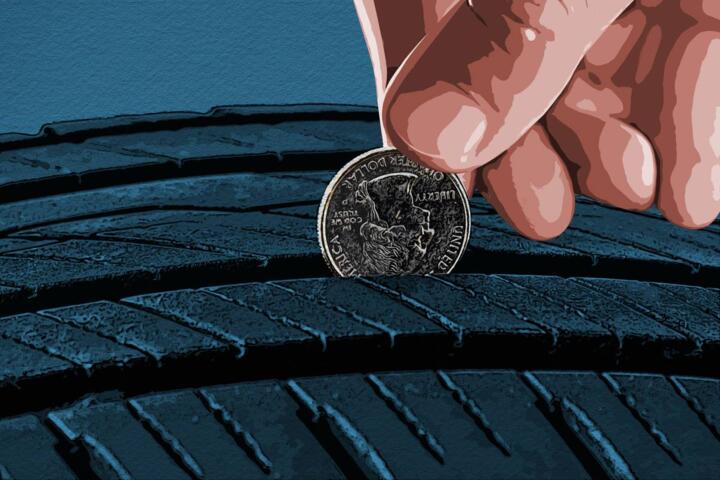
Use a tread depth gauge that reads in 32nds of an inch or millimeters. Measure in multiple locations across the tire: inside shoulder, center, and outside shoulder, and repeat on both sides of the vehicle. A quick rule for decision support is to treat the lowest reading as the replacement trigger, since that spot usually has the least margin. If you only measure the center, you can miss shoulder wear caused by alignment or camber changes.
When you record readings, note the date and mileage. A small aside from shop workflows: many technicians track tread depth at the same three positions each visit, and a consistent method makes trend lines more useful than a one-time number. If your gauge has a digital readout, check its battery and calibration against a known reference strip; cheap gauges can drift, and the error can be a few tenths of a millimeter.
Use A Wet-Weather Threshold
A practical replacement point for many passenger cars is around 4/32 in (about 3.2 mm) for drivers who face frequent rain. This is not a legal limit, and it is not a guarantee of performance, but it creates more buffer for water evacuation than waiting for 2/32 in (1.6 mm). At 4/32 in, the tread grooves still have meaningful depth for channeling water, and the tire often retains more predictable braking behavior on wet pavement than at the legal floor.
For dry climates with minimal rain, some drivers extend use closer to the legal minimum, yet wet traction still matters during storms, coastal fog, or unexpected downpours. If your area has frequent heavy rain, the safer point shifts earlier. The key is matching the replacement point to your actual exposure rather than to the inspection rule.
Check Age And Condition
Inspect tire sidewalls for cracking, bulges, or exposed cords. Tread depth can look fine while the tire shows aging damage, and that damage can affect structural integrity. Many tire manufacturers recommend replacement based on age even when tread remains, and the common guidance is around 6 to 10 years depending on storage conditions and tire type. The exact number varies by brand and model, so the sidewall DOT code and the manufacturer’s documentation matter.
To read the DOT code, find the four-digit date code on the tire sidewall. For example, a code ending in “2321” indicates the tire was made in the 23rd week of 2021. If you see cracking near the tread edges or along the sidewall, the tire may need replacement sooner than tread depth suggests.
Plan Rotation And Pressure
Uneven wear accelerates the approach to the lowest tread measurement. Follow the vehicle’s recommended tire rotation interval, which is often tied to mileage and can be found in the owner’s manual. Rotation patterns vary by drivetrain and tire type, and mixing up the pattern can worsen wear. If you drive a front-wheel-drive car, for instance, the front tires may wear faster due to steering and load transfer, so rotation timing can shift the replacement point.
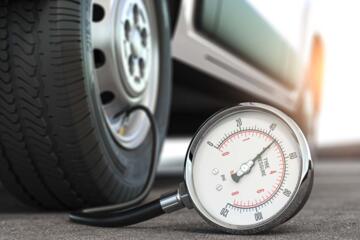
Keep tire pressure at the door-jamb specification for your load and tire size. Pressure affects contact patch shape, and contact patch shape affects both wear and grip. A mild frustration many drivers experience: the “cold” pressure spec means you need to measure after the car sits, not after a long drive. A handheld gauge like a common 0–60 psi model can be accurate enough for routine checks, but it should be compared occasionally to a shop gauge.
Case Examples With Real Numbers
Scenario 1: Rainy commute, uneven wear. A driver records tread depth on a sedan at 38,000 miles. The inside shoulder measures 3/32 in (2.4 mm), the center measures 5/32 in (4.0 mm), and the outside shoulder measures 4/32 in (3.2 mm). The lowest reading is 3/32 in, and the pattern suggests alignment or camber-related wear. The driver replaces the tires at the next safe opportunity instead of waiting for the center to hit 2/32 in. After replacement, wet braking feels more consistent, and the driver schedules an alignment check because the wear pattern did not match normal even wear.
Scenario 2: Dry climate, aging tires. Another driver lives in a region with limited rainfall and notices tread depth around 6/32 in (4.8 mm) after 5 years. The tires show slight sidewall cracking near the shoulder, which the driver had previously ignored because the tread still looked deep. The driver checks the DOT date code, confirms the tires are approaching the manufacturer’s age guidance, and replaces them before the next winter season. The decision is driven by condition and age rather than by tread depth alone, since the rubber’s aging can reduce grip even when grooves remain.
Replacement Checklist And Table
| Decision Point | Typical Tread Depth | What It Means For Grip | Action |
|---|---|---|---|
| Legal Minimum | 2/32 in (1.6 mm) | Meets regulatory floor; wet performance margin is thin | Pass inspection if tread is uniform and no damage exists |
| Safer Replacement Target | 4/32 in (3.2 mm) | More groove depth for water evacuation; better wet braking margin | Plan replacement, especially with frequent rain |
| Condition-Based Trigger | Any depth | Cracks, bulges, exposed cords, or severe uneven wear can reduce safety | Replace promptly and inspect alignment/pressure |
Step-by-step checklist:
- Measure tread depth at inside, center, and outside on each tire; record the lowest value.
- Confirm tread-wear bar position if present, but treat it as a minimum indicator rather than a performance target.
- Inspect for sidewall cracks, bulges, and tread separation; stop using the tire if damage is visible.
- Check tire age using the DOT date code and compare it to the manufacturer’s guidance.
- Review recent pressure readings and rotation history; uneven wear often points to a fixable cause.
- Choose a replacement point based on your wet exposure, not only on inspection rules.
Common Mistakes To Avoid
One mistake is measuring only one groove or only the center. A tire with shoulder wear can still pass a quick glance while the lowest tread measurement drops toward the legal minimum. Another mistake is ignoring the difference between “tread depth” and “tire condition.” Cracking, bulges, and puncture damage can justify replacement even when tread depth remains above 4/32 in.
Drivers also sometimes replace only one tire. Matching tire tread depth and wear across axles matters for handling and braking consistency, and mismatched tires can affect traction control behavior. If you replace a single tire, it can create a tread-depth mismatch that persists until the next replacement cycle, and that mismatch can be more noticeable in wet conditions.
Some people rely on visual tread patterns alone. Tread designs vary, and two tires can look similar while having different groove depths due to different initial designs and wear rates. A gauge reading beats a photo-based judgment, and it reduces the chance of a shop estimate turning into a guessing game.
Finally, drivers sometimes forget that pressure and alignment issues change the wear rate. If you replace tires without correcting the cause of uneven wear, the new tires can reach the replacement point sooner than expected, and the “legal minimum” can arrive again with less warning.
FAQ
What Is The Legal Tread Minimum For Passenger Tires?
Many jurisdictions use 2/32 in (1.6 mm) for passenger tires, and the EU uses 1.6 mm as well. Exact rules vary by country and state, so check local inspection requirements and the tire-wear bar markings.
Is A Tire At 2/32 In Automatically Unsafe?
It meets the regulatory floor, but wet braking margin is often reduced at that depth. A tire can be legal and still perform worse in rain than a tire replaced earlier, especially if tread wear is uneven or the rubber is aged.
Where Should I Measure Tread Depth On Each Tire?
Measure inside shoulder, center, and outside shoulder. Use the lowest reading across those points as the decision input, since uneven wear is common and the lowest spot usually drives traction limits.
How Does Tire Age Affect Replacement Decisions?
Tread depth does not capture rubber aging. Sidewall cracking, loss of flexibility, and manufacturer guidance based on the DOT date code can justify replacement even when tread depth remains above the legal minimum.
Should I Replace Tires In Pairs Or Sets?
Many owners replace tires in pairs on the same axle to keep handling consistent, and some vehicles require matching tire characteristics. If only one tire is replaced, tread-depth mismatch can persist, so ask for an axle-level comparison.
Author's Insight
Legal tread minimums are regulatory thresholds tied to continued road use, not a guarantee of wet or dry performance. A safer replacement point often comes from combining tread depth measurements with condition checks like sidewall cracking and visible damage. The most reliable home method uses a tread depth gauge and multiple measurements across the tire, then tracks the trend over time. If you want a decision rule, start with the lowest tread measurement, compare it to a wet-weather target such as 4/32 in, and adjust for tire age and uneven wear.
Key Takeaways
- Legal minimum tread depth commonly equals 2/32 in (1.6 mm), but it does not represent a safety performance target.
- Measure multiple tread locations and use the lowest reading; uneven wear can hide behind a good-looking center.
- Use tire condition and age alongside tread depth; cracking or bulges can justify replacement at any tread depth.
- For frequent rain, planning replacement around 4/32 in (3.2 mm) often preserves more wet traction margin than waiting for the legal floor.
- Fix the causes of uneven wear—pressure, rotation pattern, and alignment—so new tires last longer and wear more evenly.