Payment Tokenization Basics
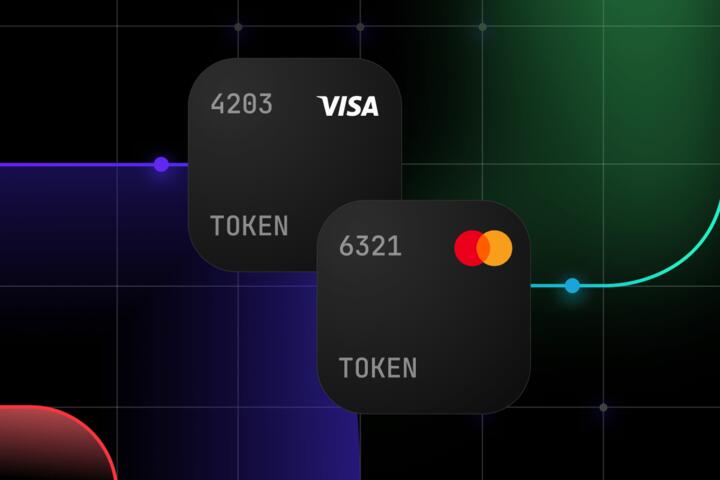
Payment tokenization replaces sensitive payment card data with a token that a merchant can use to request authorization and capture. The token is not the same thing as a masked card number shown on receipts, and it is not a substitute for PCI DSS controls. In most card networks’ designs, the token maps back to the underlying card data inside a token service run by a payment processor, a tokenization service provider, or the card network’s token infrastructure.
In practice, a merchant’s systems usually store the token plus metadata such as the token reference, expiration details, and a link to the customer account. A common example is a saved payment method in an e-commerce account: the merchant stores a token so the customer can pay again without re-entering the card number. When a customer checks out, the merchant sends the token to a payment gateway, which routes the request to the token service for translation and authorization.
Tokenization can be implemented in different ways. Some flows tokenize at the payment gateway before the merchant ever sees the card number; other flows tokenize after the merchant receives card data but before it is stored. Those differences change what the merchant stores and what the merchant’s systems must protect.
One small detail that often confuses people: a token can be “format-preserving,” meaning it looks like a card number length-wise, but it still behaves like a token in the token service. I’ve seen support pages that describe tokens as “encrypted card numbers,” which is imprecise; encryption and tokenization are different mechanisms, and the merchant’s storage obligations depend on the actual data elements.
Common Merchant Storage Mistakes
People often assume tokenization means the merchant stores nothing sensitive. That assumption breaks when merchants also store other payment-related data such as billing address fields, device identifiers, transaction IDs, or payment method records that can be linked back to a specific customer. Even if the raw PAN is absent, the combination of identifiers can still create privacy and breach impact.
A second mistake is mixing up tokenization with “masking.” Masked data like “**** 1234” is not tokenization; it is a display format. If a merchant stores the full PAN or stores it in logs, exports, or analytics pipelines, tokenization at checkout does not fix those downstream storage paths.
Dependencies matter. Tokenization relies on a payment gateway, a token service, and network rules for authorization and lifecycle events. If the merchant’s integration stores the token but also stores the card number for retries, chargebacks, or failed authorization debugging, the tokenization benefit shrinks. Many teams discover this only after incident reviews, when they search logs and find card data in places they did not expect.
Another pain point is token lifecycle handling. Tokens can be single-use or reusable depending on the scheme and configuration. Some tokens are “network tokens” that can support recurring payments; others are “vault tokens” tied to a specific merchant account. If a merchant treats tokens as permanent identifiers, it can run into re-tokenization requirements after card changes, account closures, or token service updates.
Solutions And Practical Advice
Ask What Data Is Stored
Request the merchant’s payment method storage description in plain terms. You’re looking for whether they store a token only, whether they store any PAN, and whether they store CVV (most legitimate systems do not store CVV after authorization). If the merchant offers “saved cards,” ask whether the saved record contains only a token reference and whether the token is generated by a gateway or a token service. A useful operational detail: ask whether the merchant can delete the saved payment method record and whether deletion triggers token deactivation or only removes the link in their database.
For consumers, a practical path is to check the checkout and account settings pages for wording about “tokenized payment methods” and to look for a data retention statement in the privacy policy. If the policy is silent, contact support and ask for the retention period for payment method records. Many merchants can answer retention for account data, but payment-method retention varies by processor contracts and chargeback windows.
Check Token Scope And Reuse
Token scope determines what the token can do. Some tokens are valid only for a specific merchant and integration; others can support multiple transactions under defined rules. When a merchant supports subscriptions, the token must survive recurring billing events, which usually means the merchant stores a token reference tied to a billing agreement. If you see repeated prompts to re-enter card details after a period, that can indicate token expiration or a re-tokenization step that the merchant triggers.
As a consumer, you can observe token behavior indirectly. If you remove a saved card and later add it again, the merchant may create a new token record. If you change your billing address, the merchant may update billing fields without touching the token. Those patterns help you infer whether the merchant is treating the token as a stable payment method identifier or as a short-lived credential.
Understand Security Standards
Tokenization does not remove the merchant from security obligations. Under PCI DSS, merchants and service providers must protect cardholder data and define their scope based on what they store, process, or transmit. If a merchant stores only tokens and no PAN, their PCI scope can shrink, but they still must secure the systems that handle tokens and authorization flows. If card data appears in logs or backups, scope expands.
Look for evidence of security controls in the merchant’s documentation or trust center: encryption in transit, access control, audit logging, and incident response processes. You may also see references to PCI DSS compliance in contracts or public statements. I’ve noticed merchants sometimes cite “PCI compliant” without describing whether they store PAN; that statement alone does not tell you what data elements exist in their databases.
Plan For Disputes And Chargebacks
Chargebacks and disputes require transaction evidence. Merchants often store transaction IDs, authorization codes, and settlement records. Those records can include references to the token service, which can be sensitive in the sense that they link to a payment method. If you’re tracking a dispute, ask what identifiers the merchant uses and whether they can provide proof without exposing full card numbers.
For recurring payments, ask how the merchant handles token updates when a card expires or is replaced. Some processors support automatic card updating through network services; others require customer re-entry. The operational detail that matters is whether the merchant can re-authorize using the existing token reference or whether it must create a new token record.
Case Examples With Realistic Details
Example 1: Saved Card In Retail
A customer buys from an online retailer and saves a card for future purchases. The retailer’s checkout uses a hosted payment page from a gateway; the retailer never receives the full PAN. After authorization, the retailer stores a token reference in its “payment_methods” table along with the card brand, last four digits, and an internal customer ID. When the customer checks out again, the retailer sends the token to the gateway for authorization.
Later, the customer updates their billing address. The retailer updates address fields in its customer profile and keeps the same token reference. When the customer removes the saved card, the retailer deletes the link record but the token service may still retain token history for a limited period for reconciliation. The customer sees the card removed from the UI, but the backend may keep transaction records for dispute windows.
Example 2: Subscription Billing And Token Rotation
A subscription service charges monthly. The service stores a token reference created during the first successful payment and uses it for subsequent recurring charges. After a year, the customer’s bank issues a replacement card number. The token service triggers re-tokenization or the processor requests a new token mapping, and the merchant receives a new token reference while keeping the subscription active.
The customer experiences a brief change: the next billing cycle requires a confirmation step or a re-authentication flow. That behavior can happen when the token mapping no longer authorizes under the old reference. The merchant’s database updates the token reference, while the subscription record remains the same.
Tokenization Checklist For Buyers
| What To Check | What You Want To Hear | Why It Matters | Red Flags |
|---|---|---|---|
| Stored payment data | Token reference only; no PAN storage | Reduces exposure if databases leak | Claims of “encrypted PAN” without scope details |
| CVV handling | CVV not stored after authorization | CVV storage increases breach impact | “We keep card details for faster checkout” |
| Token lifecycle | Clear rules for reuse and rotation | Prevents failed renewals and re-entry loops | Frequent prompts to re-enter card without explanation |
| Deletion behavior | Account deletion removes token links | Limits ongoing linkage to your account | UI deletes card but support says “we can’t remove it” |
| Security controls | Access controls, audit logs, encryption in transit | Protects token references and transaction data | No mention of PCI scope or security practices |
If you want a quick workflow: check the privacy policy for “payment method” retention, then ask support whether the merchant stores only tokens, then verify what happens when you delete a saved card. That sequence catches the most common gaps.
Common Mistakes That Undermine Trust
One recurring mistake is vague wording like “we encrypt your card details.” Encryption can protect data in transit or at rest, but it does not answer whether the merchant stores PAN, stores it in backups, or logs it during troubleshooting. Tokenization changes the data elements, so the disclosure should name the stored category: token reference versus PAN.
Another mistake is treating tokenization as a one-time checkbox. Merchants often add new integrations over time: analytics tags, customer support tools, fraud scoring services, and export jobs. A token can still be exposed if it gets copied into logs or third-party systems without access controls. A small aside from audits: teams sometimes discover that a “debug mode” in a staging environment copied payment payloads into a developer dashboard, and the habit survived into production.
Some merchants also confuse “token vault” with “token service.” A vault can store tokens, but the token service controls translation back to card data. If a merchant claims it “stores tokens securely” without describing who controls token translation, you cannot judge the risk of token misuse.
Finally, watch for mismatched retention claims. A privacy policy might say “we retain payment records for X months,” while support says “we keep payment methods until you delete them.” Those statements can both be true if one refers to transaction records and the other refers to saved payment method links. Clarify which record type the policy covers.
FAQ
Does Tokenization Replace PCI DSS?
No. Tokenization can reduce what counts as cardholder data in a merchant’s systems, but PCI DSS scope depends on what the merchant stores, processes, or transmits. Merchants still must protect token-related systems and authorization flows.
What Exactly Does A Merchant Store?
Commonly, merchants store a token reference plus metadata like card brand and last four digits, billing agreement identifiers for subscriptions, and transaction IDs for reconciliation. The merchant should not store PAN or CVV after authorization, but policies and integrations vary.
Can A Token Be Used Outside The Merchant?
Tokens usually have scope rules tied to the merchant and the token service configuration. A token reference typically cannot be used like a standalone card number, and translation back to card data follows network and service rules.
Why Do I Sometimes Re-Enter My Card?
Re-entry can happen when a token expires, when the bank issues a replacement card that breaks the token mapping, or when the merchant’s subscription flow requires re-authentication. The merchant can often explain the specific trigger.
Is A Token Encrypted Card Data?
Often, tokens are not described as “encrypted PAN” because they are different data elements managed by a token service. Encryption may still be used for data in transit and at rest, but tokenization and encryption are separate mechanisms.
Author's Insight
Payment tokenization changes what a merchant stores, but it does not remove the need to understand data flows. The most reliable way to judge risk is to identify the exact data elements in merchant databases and logs: token references, transaction identifiers, and customer linkage fields. PCI DSS scope and token service contracts shape what is allowed and what must be protected, and those details vary by integration.
When disclosures are vague, consumers can still ask targeted questions about PAN and CVV storage, token lifecycle behavior for subscriptions, and deletion effects on saved payment method records. I’ve seen payment documentation reference versioned security guidance (for example, PCI DSS v4.0 guidance published in 2022), and teams sometimes update controls without updating public language, which makes direct questions more effective than marketing claims.
Key Takeaways
- Tokenization usually means merchants store a token reference and metadata, not the full card number, but integrations can still leak card data into logs or backups.
- Token scope and lifecycle determine whether saved cards and subscriptions keep working without re-entry.
- PCI DSS scope depends on what the merchant stores and transmits; tokenization can reduce scope but does not replace security controls.
- Ask support about PAN/CVV storage, saved-payment deletion behavior, and what happens during card replacement events.